

Liverpool City Council is supporting breast cancer awareness month, and is lighting up civic buildings pink on Friday 20 October.
Breast screening saves lives as cancers can be diagnosed and treated earlier, often before you can even see or feel any changes to your breasts yourself.
Women, and some men, aged from 50 up to their 71st birthday are invited for free NHS breast screening.
However, less than half of women in Liverpool attend their first breast screening appointment when invited and data from GPs suggests that just 2 in 5 eligible women aged 50-54 have attended for screening in the previous three years.
Breast screening
The purpose of the screening appointment is to take two x-ray images of each breast (a mammography) to check for lumps and other changes that could be cancer.
The screening programme saves around 1,300 lives each year by diagnosing and treating cancers early. Some women have said that they are anxious about attending their breast screening appointment because they don’t know what to expect. The mammographer understands this, and she will do everything she can to make the experience as comfortable as possible. The NHS have produced a short video to show what happens at the screening appointment. You can watch it here: NHS Breast Cancer Screening.
The Liverpool Breast Screening Service also provide information about screening appointments, and a short video on how to get there: https://www.rlbuht.nhs.uk/departments/medical-specialisms/breast-unit/breast-screening/
Booking an appointment
If you have been invited for a breast screening in Liverpool you can book an appointment at a convenient location by calling the booking line on 0151 282 6920.
If you missed, or forgot to book an appointment, you can still contact the team to make an appointment even if you received the invitation months, or even years ago. Women over the age of 70 will not receive a regular invitation, but they can request a mammogram appointment.
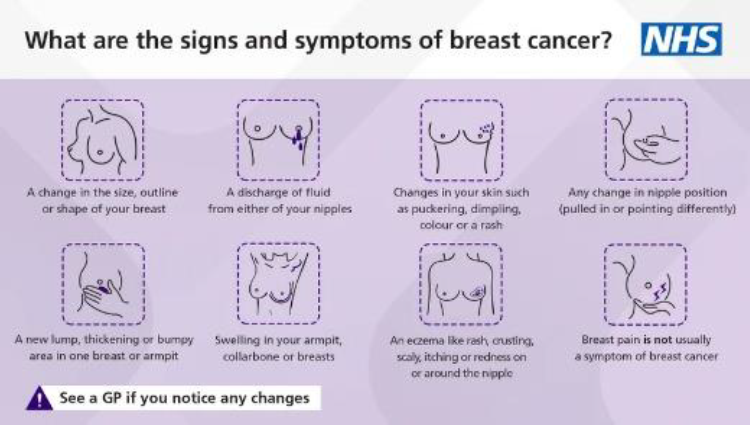
Regardless of whether you expect to be called for a screening appointment, it is important that you look at and check your breasts regularly, even if you have just had a mammogram. Get to know how your breasts normally look, you will be more likely to spot any changes that might be signs of breast cancer. CoppaFeel! Have produced a video to guide to show you how to do this: CoppaFeel! How to check you boobs.
If you are concerned, or spot any of the signs and symptoms do not hesitate to contact your GP practice.
A breast cancer survivor’s story
Victoria Roach is a patient from the Liverpool Breast Screening service at Royal Liverpool University Hospital Trust.
At the age of 37 and pregnant, she found a lump on her breast and contacted her GP. She was referred to the breast clinic, diagnosed, and quickly treated for breast cancer. She urges other women to check their breasts:
“Young people get breast cancer, so check your breasts. If something doesn’t feel right, get it checked by the GP and get a referral to the breast clinic. However scared you may be, always get it checked out. I am here today alive, well and cancer free, with the most amazing, healthy, beautiful boy. Cancer doesn’t stop but together we can all try to beat it.”
Wear it Pink day
Friday 20 October is the campaign focus “Wear it Pink!” day. Liverpool City Council will light up its public buildings in pink to raise awareness of breast cancer.
Professor Matt Ashton, Liverpool’s Director of Public Health, said: “Women of all ages should be ‘breast aware’ and know the signs and symptoms of breast cancer.
“We know that some women are anxious about screening, particularly if they have never been before but there is lots of information available to help you make an informed decision about breast screening.
“We also know that identifying a problem early and getting it checked out can save a life, and save the worry”.
Cabinet Member for Public Health, Councillor Harry Doyle, said: “It is important that Liverpool City Council supports the breast cancer awareness campaign.
“Breast Cancer is the most common cancer among women and affects so many of our families.
“Please encourage the women in your life, your mum, your wife, sisters, aunties and friends, to self check and attend for screening when invited.”