
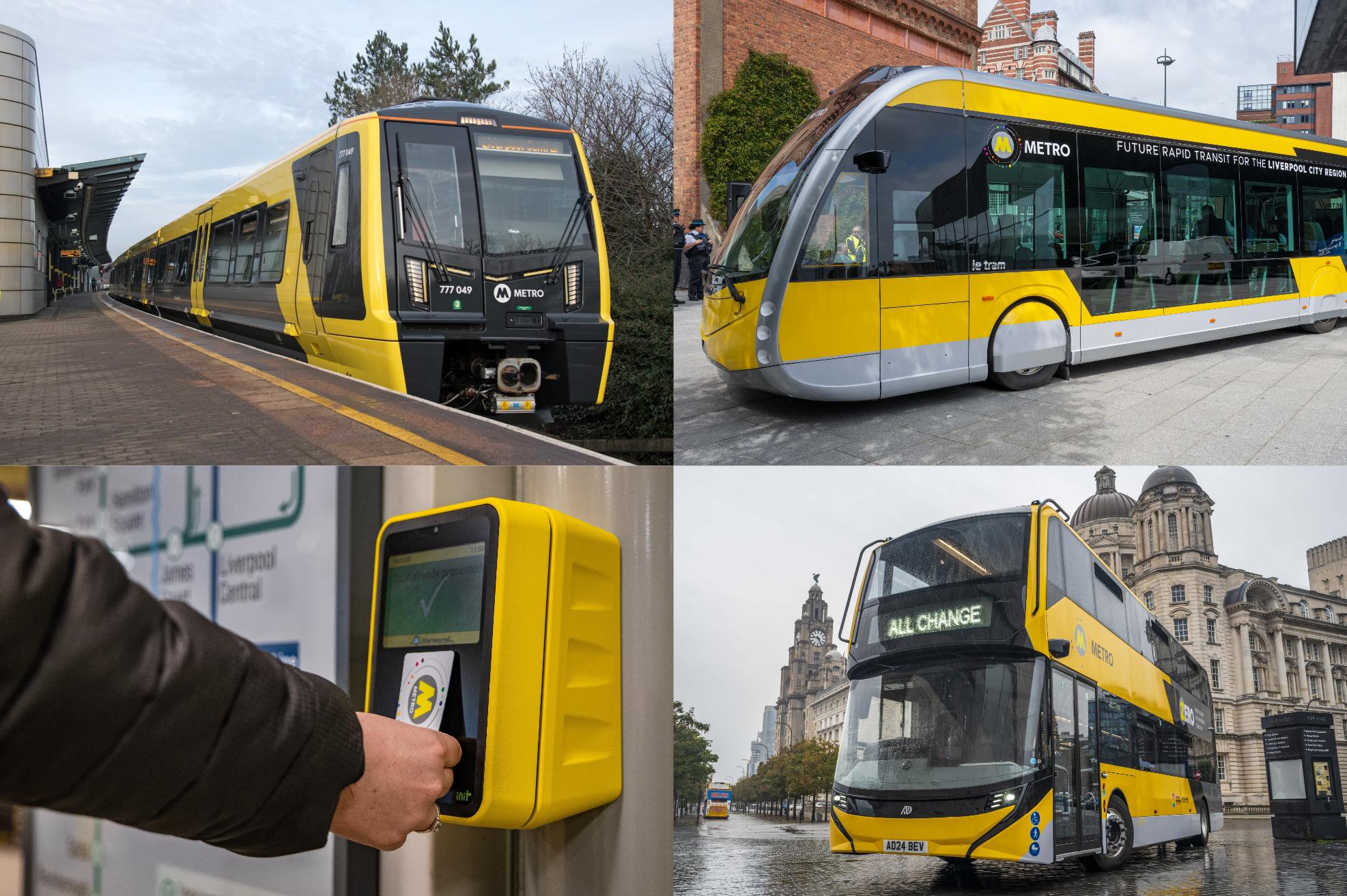
Liverpool is set to benefit from a share of a record-breaking £1.6bn investment in the city region’s public transport including new railway stations, rapid transit links and smart ticketing across the entire network.
The city region’s biggest ever public transport investment is designed to better connect communities, including major new housing developments, while boosting productivity, driving economic growth and unlocking regeneration.
The Transport for City Region (TCR) settlement was secured in June and confirmed by the Chancellor ahead of this year’s Spending Review. Liverpool City Region is breaking new ground as the first Combined Authority to showcase its ambitious plans for TCR investment – paving the way for faster, greener, and more connected journeys across the region.
Network improvements are expected to result in a 20% increase in residents able to access Liverpool City Centre by public transport within 30 minutes as well as a marked increase in the number of residents being directly linked to town centres across the region.
The funding will also lead to a 20% increase in residents living within 800 metres of a step-free rail station – while ensuring fairer access to public transport across the city region’s six boroughs of Halton, Knowsley, Liverpool, Sefton, St Helens and Wirral.
Councillor Liam Robinson, Leader of Liverpool City Council, said: “It’s great to see such significant investment coming to Liverpool and the wider city region.
“Our city is evolving and thriving, and we are determined to deliver a sustainable network that seamlessly combines public transport and active travel options.
“The new rapid transit system will greatly improve journeys to popular locations including John Lennon Airport, the two major football grounds and the city centre, and the other schemes will continue to build on this goal.
“Transport is central to our city’s future growth and it is vital the network meets the needs of residents and visitors alike, while providing greater choice and connectivity for everyone moving around Liverpool.”
Steve Rotheram, Mayor of the Liverpool City Region, said: “This £1.6 billion settlement is the largest transport investment in our region’s history and a massive statement of intent towards delivering the greener, more accessible, more affordable and better-connected public transport system our 1.6 million residents deserve.
“Fundamentally, this long-term plan is about inclusive growth. That means new, step-free rail stations, rapid transit links, and smart ticketing that connects communities directly to jobs, new homes, cultural attractions, and of course major regeneration projects.”
A key focus of the plans is to support the building of thousands of new homes in locations that will be well connected to major employers and the region’s growth industries.
The £1.6bn investment comes on the back of several years of record level investment in transport across the region, including the rollout of a £500m fleet of state-of-the-art trains, the purchase of more than 100 new all-electric zero-emission buses, the extension of the Merseyrail network to Headbolt Lane in Kirkby and the building of the first new Mersey Ferry in more than 60 years.
The proposals for this latest round of funding – which are set to go before the Combined Authority this month – are designed to enable the further overhaul and expansion of the region’s public transport system.
What are the key investments being made in Liverpool and the region?
Liverpool
- New rail station to serve the vibrant Baltic triangle district.
- Rapid transit system linking Liverpool city centre, Liverpool John Lennon airport and Liverpool FC and Everton FC football stadiums.
- New active travel routes connecting Childwall to the city centre and supporting regeneration around Vauxhall and Greatie Market, as well as around key education and employment sites in Knowledge Quarter.
City region-wide
- Bus franchising, giving more local control over fares, routes and timetables
- More than £300m investment in highways to improve road infrastructure for cars as well as buses and create new walking and cycling links.
- Integrated smart ticketing which will allow passenger to switch between modes whilst always being guaranteed the best fare for their travel